Small business owners are often one-person orchestras. They make the product, talk to customers, update social media, answer emails, track supplies, plan promotions, and still try to protect the actual craft that made the business worth starting in the first place.
That is where AI agents can become useful. Not as a miracle button, and not as a replacement for human taste, but as a digital teammate that can hold context, research a question, propose options, draft materials, and keep the work moving while the owner focuses on judgment.
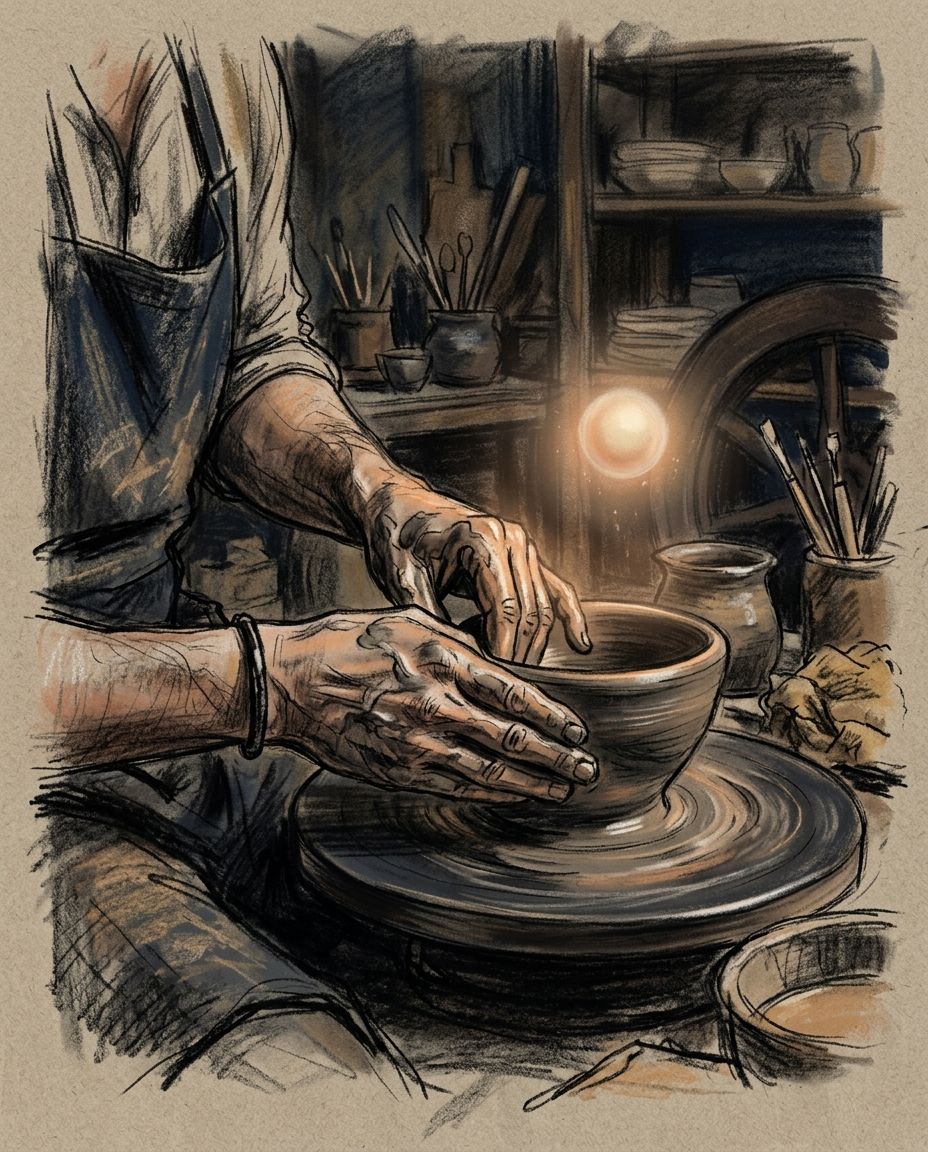
Imagine a small pottery studio. The owner knows clay, glaze, touch, timing, and the quiet discipline of making objects by hand. What they may not have is a marketing department, a strategist, a copywriter, a customer-support assistant, and a content planner. A good AI agent does not turn the studio into a soulless machine. It gives the maker a second pair of hands for the parts of the work that usually steal time from making.
1. From vague idea to business shape
Most projects begin as a feeling: “I want to open a studio,” “I want to sell my work online,” or “I want to run workshops, but I do not know how to package them.” The first useful job for an AI agent is not writing slogans. It is helping the owner turn a foggy idea into a map.
The owner can ask: “Research pottery studios in my city. Find successful examples, compare their offers, identify weak spots in the market, and suggest a concept that would feel distinct.”
An agent can search, summarize, compare pricing, collect common customer complaints, and return with a practical brief: possible audiences, workshop formats, product bundles, seasonal ideas, and risks. The owner still decides. But instead of starting from a blank page, they start from a structured field of options.
2. From business shape to daily operations
The hidden weight of a small business is repetition. Someone has to answer the same questions, explain delivery terms, write class descriptions, prepare checklists, and remind customers what to bring. These tasks are important, but they are rarely the reason the business exists.
An AI agent can draft FAQ answers, prepare email templates, turn a workshop plan into a checklist, and keep a reusable knowledge base. If the studio offers a beginner pottery class, the agent can help create:
- a clear class description;
- a booking confirmation message;
- a reminder sent before the class;
- a short after-class follow-up;
- a product-care note for customers who buy handmade pieces.
None of this needs to sound robotic. The owner can teach the agent the studio’s voice: warm, precise, calm, a little tactile. The agent then becomes a keeper of consistency.
3. From material to publication
Content is where many small businesses get stuck. They have real stories, but no time to shape them. A pottery studio has process photos, kiln accidents, glaze experiments, customer moments, and quiet lessons from the wheel. The raw material is there. The missing piece is often editorial structure.
An AI agent can help turn scattered notes into publishable content: a blog post about the first firing of the season, an Instagram caption about a new glaze, a newsletter announcing workshop dates, or a short product story for a new collection.
A good workflow can be simple:
- the owner drops a rough idea or photo onto the desk;
- the writing agent proposes the article angle;
- the visual agent suggests the mood, cover image, or composition;
- the editor agent checks whether the result is clear, useful, and honest;
- the owner approves publication.
The value is not volume. The value is reducing friction between “this is worth sharing” and “this is ready to publish.”
4. From publication to learning
Publishing is not the end of the loop. It is the point where the business starts listening. Which posts lead to questions? Which products get saved or shared? Which workshop page makes people book, and where do they hesitate?
An agent can help collect signals: comments, common questions, analytics notes, and customer replies. It can suggest follow-up content, spot confusing wording, or recommend a clearer offer. The owner does not need to become a data analyst. They need a companion that keeps the feedback visible and turns it into next steps.
What makes this different from “just using AI”
The difference is continuity. A one-off chatbot prompt can write a paragraph. An agent can remember the current project, understand the business voice, keep track of unfinished tasks, use tools when needed, and return to the work later.
For a small business, that continuity matters more than spectacle. The best AI system is not the loudest one. It is the one that quietly protects attention, reduces administrative drag, and gives the owner more room to do the work only they can do.
In the pottery studio, the glowing assistant beside the wheel is not shaping the clay alone. It is lighting the workbench, holding the plan, remembering the next step, and helping the maker bring the piece into the world.