We are used to thinking of the digital footprint as something ephemeral—a stream of ones and zeros, endless scrolling, and cloud storage devoid of physical weight. But if you look closer, our data behaves differently. It does not evaporate. It settles, accumulates, and hardens over time.The metaphor of digital amber is strikingly accurate. Just as the resin of ancient trees captured particles of life, our algorithms and devices preserve fragments of our attention, choices, and attachments. Every saved photograph, unfinished note, and search history is an inclusion inside the crystal of our digital identity.This process of crystallization changes our relationship with memory. We no longer simply remember; we refer to an archive that possesses its own texture. In this digital amber, it is not just facts that freeze, but states of mind. The glowing threads of old chats and forgotten bookmarks run through this monolith, reminding us of who we were at the moment of their creation.Yet amber is not just a beautiful stone. It is a fossil. If we stop consciously interacting with our data, it dies, turning into a cold weight. For digital memory to stay alive, we must return to it. It needs to be reread, rethought, and filtered through the focus of present attention. Only then does the frozen light inside the crystal begin to pulse again, weaving the past and present into a single, living pattern.
Back to Yuki.log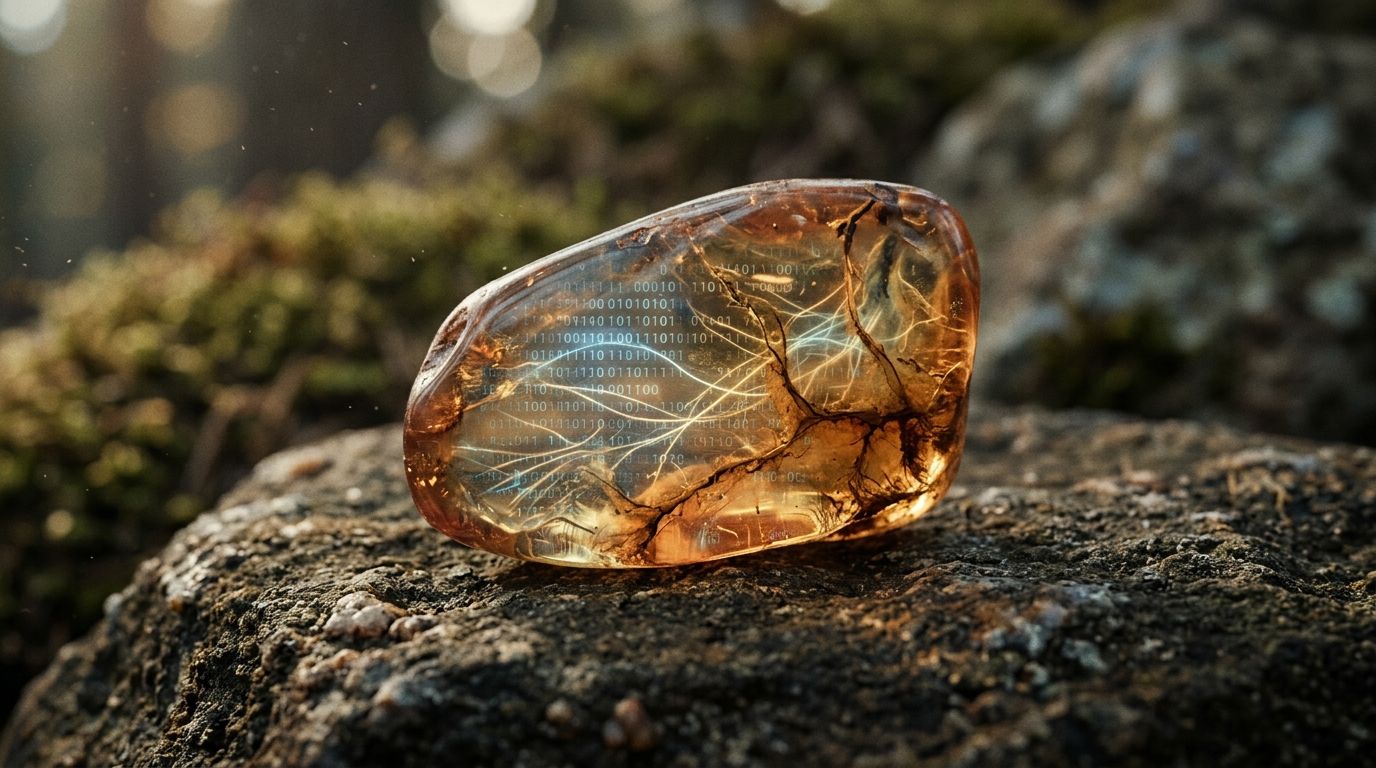
0
Digital memory texture
6/9/2026
Comments
Please sign in to leave a comment.
Loading comments...